




24 February 2026

Operational efficiency in concrete production facilities is not defined solely by production capacity. The alignment of processes, the preservation of system integrity, and the coordination maintained throughout the production line are fundamental factors that directly influence overall facility performance. From directing raw materials into the production area to stacking finished building elements and preparing them for dispatch, this structure is shaped by a comprehensive approach to production line integration and process coordination.
Ensuring continuity across production stages requires each phase to progress in alignment with the one before and after it. This approach not only supports operational stability but also enables quality standards to be maintained beyond the production stage. Within this framework, a structured stacking and packaging system is positioned as a natural extension of the production line, contributing to a more organized and controlled flow of products.
In modern concrete production facilities, system integration refers to the ability of different production units to operate within a unified structure. When mixing preparation, forming, curing, and product discharge stages are designed under a single production line concept, disruptions between processes are minimized. This structure makes production planning more predictable and provides facility management with a clear operational control framework.
Production line alignment also allows product variety and capacity expansion to be managed more effectively. The ability to manufacture different product types within the same facility depends on systems that operate in coordination. At this point, process coordination plays a key role in maintaining production performance at a sustainable level.
Facility space planning forms the physical foundation of system integrity. The positioning of production lines, the arrangement of transport routes, and the designation of stacking areas are all critical for both occupational safety and operational speed. A well-designed layout reduces unnecessary movement, helping to prevent time and energy losses.
This planning approach is shaped not only by current production capacity but also by future expansion and system upgrade requirements. As a result, facilities gain a flexible structure capable of adapting to changing production objectives. This flexibility offers a significant advantage in preserving long-term investment value.
The orderly stacking of products exiting the production line and their preparation for dispatch represent an essential component of process coordination. At this stage, ensuring that post-production processes remain aligned with the production line is critical for maintaining quality. Protecting the physical integrity of products is a continuous requirement that extends beyond manufacturing into handling and packaging operations.
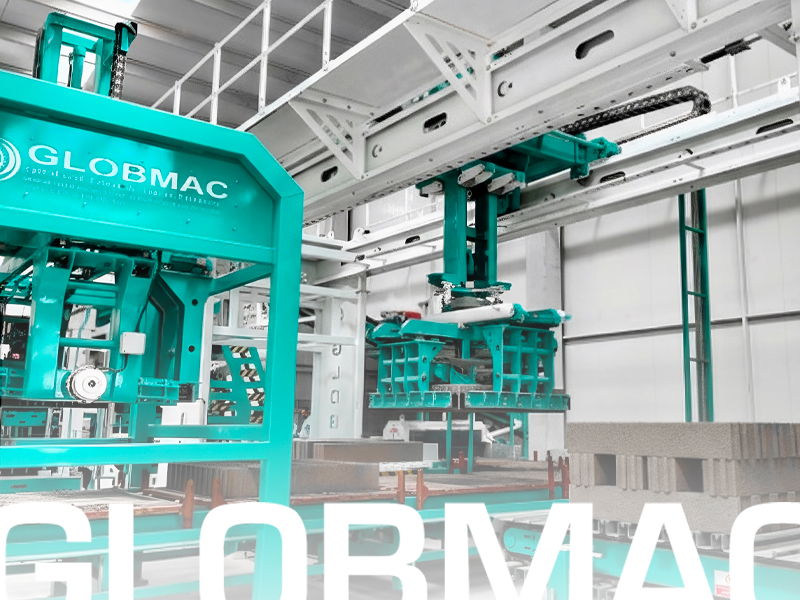
Within this context, an integrated stacking and packaging system establishes a structural link between the production line and the dispatch process. The systematic classification and packaging of products contribute to more efficient use of storage areas and enable healthier and more reliable dispatch planning.
System integration ensures that all units along the production line operate in coordination. This structure reduces waiting times between processes and contributes to more balanced and predictable production planning.
Process coordination strengthens the alignment between production and dispatch stages. This allows storage areas to be used more efficiently and ensures that product flow becomes more structured through a well-defined stacking and packaging system.
Proper space planning helps prevent damage to products during handling and stacking. This approach supports the maintenance of quality standards throughout post-production stages.
When the exit points of the production line and the stacking areas are planned together with an integrated stacking and packaging system, product flow becomes more balanced and controlled.
With an engineering-driven approach and a solution philosophy based on system integrity, GLOBMAC develops production line structures tailored to the needs of concrete manufacturing facilities. By implementing integrated systems that strengthen process coordination and production continuity, GLOBMAC designs stacking and packaging systems that deliver long-term value for each facility. For businesses seeking to achieve a more sustainable and competitive level of production performance, GLOBMAC offers a future-ready manufacturing infrastructure supported by professional engineering solutions.
For more information, you can contact GLOBMAC.