




26 March 2026

If you operate a concrete block or paving stone production plant, you know that the biggest operational challenge is not only machine downtime. In many cases, the real risk lies in the curing and transportation stage of freshly produced products.
When products are transferred using traditional handling methods, vibrations and sudden movements can damage freshly pressed blocks. This increases product waste and significantly slows down operational flow.
In this article, we examine how Finger Car systems, which have become a key component of modern production plants, optimize the production cycle and help reduce operational costs.
Many manufacturers focus primarily on increasing production capacity by investing in main block machines. However, the transfer of products to curing areas is often overlooked.
In systems that rely on forklift operators, human fatigue, inattention, and uneven floor conditions may cause damage to freshly produced blocks, particularly at the edges and corners. This type of defect not only leads to raw material loss but also increases labor costs due to additional sorting during the packaging stage.
Field observations show that in facilities with high forklift traffic, expenses related to forklift tires and fuel alone can account for up to 30% of annual maintenance costs.
Additionally, exhaust emissions and noise generated by forklift operations negatively affect workplace safety and environmental conditions.
Finger Car systems, as an intelligent automation solution, eliminate these inefficiencies and introduce a more controlled and systematic material handling process within the production plant.
When upgrading your production facility, selecting a transport system that merely moves pallets from one point to another is not sufficient.
For a long-term and efficient investment, certain technical aspects should be carefully evaluated.
As industrial land becomes increasingly valuable, efficient space utilization is critical.
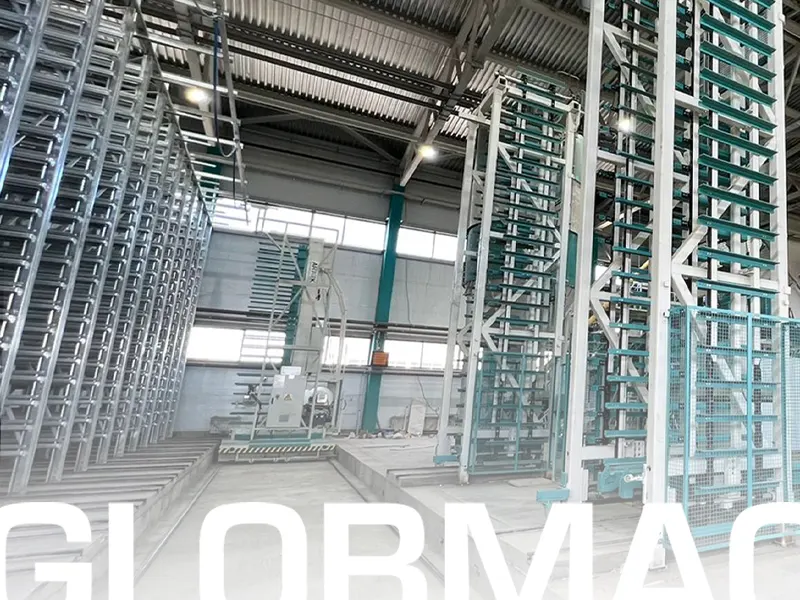
Instead of expanding curing areas horizontally, modern facilities increasingly adopt vertical rack systems.
A well-designed Finger Car system should be capable of operating within rack structures reaching 10 to 14 levels in height, with precise positioning accuracy.
This approach can reduce the required curing area footprint by up to 60%, while allowing the same facility to significantly increase production throughput within the same physical space
The PLC automation system that controls the Finger Car unit is just as critical as the mechanical system itself.
The pallet transfer cycle time must remain fully synchronized with the production speed of the block machine.
Motor drives equipped with soft start and soft stop technology prevent sudden acceleration and braking during pallet movement.
This smooth motion is particularly important for freshly produced blocks that have not yet reached full curing strength. Eliminating vibration during transportation helps preserve the structural integrity and surface quality of the products.
With deep industry expertise, Globmac positions itself not only as a machine manufacturer but also as a complete turnkey solution provider.
The Finger Car systems developed in our modern production facilities in Ankara are designed to minimize operator intervention and enable production plants to operate with consistent efficiency around the clock.
From our own field experience, one of our clients who transitioned from manual transport to a Globmac fully automatic Finger Car system reduced product waste rates from 12% to below 1% within the first six months of operation.
Our system digitally monitors pallet positions and curing durations within the rack system. Operating under the FIFO (First-In, First-Out) principle, the system ensures that pallets that have not completed the curing cycle cannot be transferred to the packaging line prematurely.
Yes. If the existing production line has compatible mechanical infrastructure or can be upgraded to a fully automatic configuration, Finger Car integration can be implemented.
No. Globmac Finger Car systems are designed with heavy-duty rails and durable bearing assemblies. Accessible lubrication points and remote technical support options make maintenance operations straightforward.
On the contrary, modern inverter technology ensures that the system consumes energy only during movement. Compared to the fuel and operating costs of multiple forklifts, facilities can achieve up to 70% savings in operational costs.
If you want to bring advanced engineering and automation capabilities into your production facility, discover the expertise of Globmac A.Ş.
For more information about our automation systems and production solutions, contact GLOBMAC today.